
A job loss. A hospital bill. A sudden family trip. Life rarely sends a warning before it sends an expense. And when it does, the people who cope best are not always the highest earners. They are the ones who kept a safety cushion aside.
The tricky part is balance. Put everything into savings and your wealth grows slowly. Put everything into investments and one bad month can force you to sell at a loss. This guide shows how to do both at once, step by step.
Why the Emergency Fund Comes First
Think of your emergency fund as the foundation of a house. Investments are the floors you build on top. Without the foundation, a small shock can bring everything down.
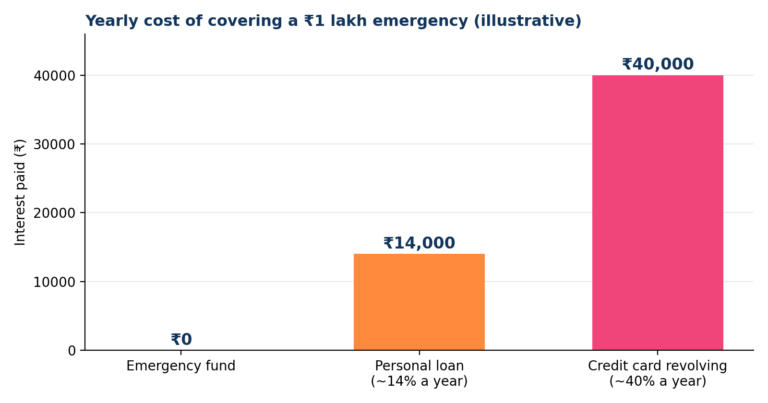
If an emergency hits and you have no cash, you have two choices: sell your investments, possibly in a falling market, or borrow at high interest. Look at how costly the second option can be.
How Big Should Your Emergency Fund Be?
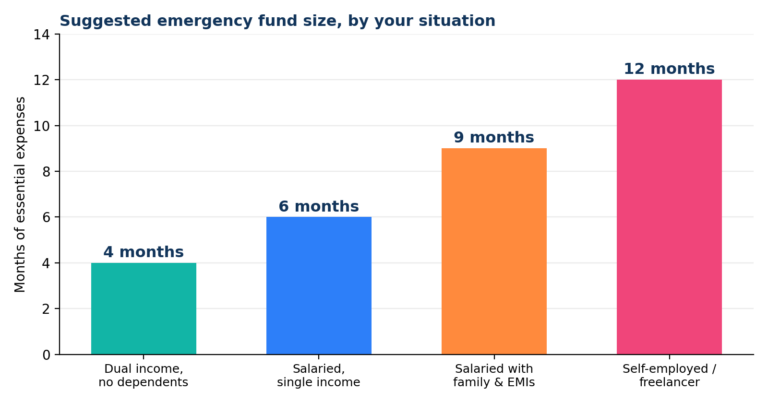
The common answer is six months of essential expenses, but your situation decides the real number. Someone with a stable dual income needs less. A freelancer with irregular earnings, or a family with EMIs and dependents, needs more.
Use essential expenses only, not your full spending. Here is what the maths looks like:
Essential expenses / month | 6-month fund | 12-month fund |
₹25,000 | ₹1.5 lakh | ₹3 lakh |
₹30,000 | ₹1.8 lakh | ₹3.6 lakh |
₹50,000 | ₹3 lakh | ₹6 lakh |
₹75,000 | ₹4.5 lakh | ₹9 lakh |
What Counts as Essential?
- Housing: rent or home loan EMI, maintenance and electricity.
- Food and transport: groceries, fuel, commute.
- Insurance and loans: premiums and all EMIs.
- Family needs: school fees and medicines.
The Split Strategy: Save and Invest Together
Many people believe they must finish the emergency fund before starting a single SIP. That sounds disciplined, but it can delay your investing habit by years, and time is the biggest driver of wealth.
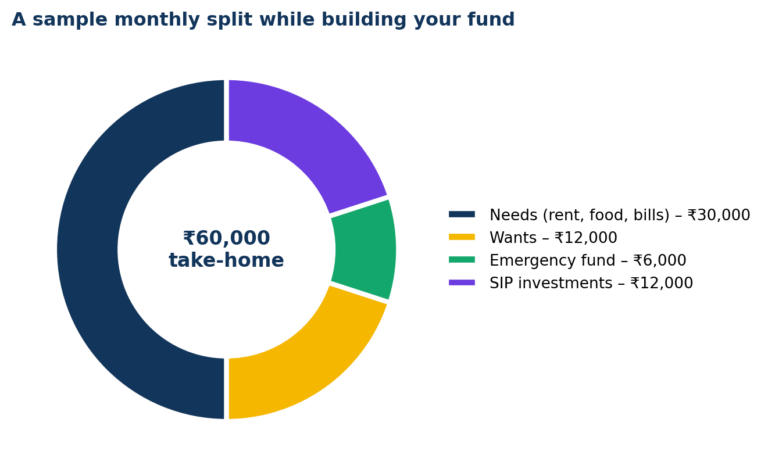
A smarter approach is to split your savings. Direct a larger share to your emergency fund until it is full, while keeping a smaller SIP running. Once the fund is complete, redirect that money to investments.
Want to see how that SIP can grow? Try our SIP calculator.
How Long Will It Take?
Less time than you think, especially if you automate. For a ₹1.8 lakh target, saving ₹6,000 a month gets you there in about 28 months. Raise it to ₹12,000 and you finish in around 15. Every bonus, tax refund or increment you add to the fund shortens the journey.
A Quick Real-Life Example
Meet Riya, a 29-year-old designer in Pune who takes home ₹60,000 a month. Her essential expenses are ₹30,000, so her six-month target is ₹1.8 lakh. She did not stop investing. Instead, she moved ₹6,000 into a separate liquid fund every month and kept a ₹12,000 SIP running.
Two and a half years later, her cushion was full. She simply redirected the ₹6,000 to a second SIP. Her portfolio never paused, and when her laptop died unexpectedly, she paid for it without touching a single investment.
Where Should You Keep Your Emergency Fund?
The golden rule: safety and quick access matter more than returns. Use a simple two-tier setup:
– Tier 1 (1 month): keep it in your savings account for instant access.
– Tier 2 (remaining months): park it in a sweep-in fixed deposit or a liquid mutual fund, which usually offers better returns and money within a day or so.
Not sure which is better? Our comparison of liquid funds vs savings accounts explains the trade-offs.
Avoid putting this money in stocks, ELSS, real estate or long lock-in schemes. If the money cannot reach you quickly, it is not an emergency fund.
Rules for Using and Refilling Your Fund
Use it only for true emergencies: medical bills, job loss or urgent repairs. A sale or a holiday is not one. After any withdrawal, refill it first before increasing your SIP. Review the target every year, since expenses rise with inflation.
Your fund is also stronger when paired with proper cover. Read our guide to health insurance, so one hospital bill never drains your savings.
Conclusion: Safety and Growth Can Walk Together
An emergency fund is not a choice against investing. It is what lets your investments grow in peace. Work out your essential expenses, pick a target of 6 to 12 months, automate a monthly deposit, and keep a smaller SIP alive alongside it. Within two years or so, you will have a cushion and a growing portfolio. That is real financial confidence.
Ready to Build Your Safety Net?
Talk to a Unicorn Finance advisor and get a simple plan that balances your emergency fund, SIPs and long-term goals.
Leave A Comment