

How to Start a SIP for Beginners: A Step-by-Step Guide
You’ve decided to finally start investing. Good — here’s exactly what to do next, in the right order, without the jargon.
If you’ve been putting off starting a SIP because it feels like it involves ten confusing steps and a stack of paperwork — it doesn’t, not anymore. Most of it can be done from your phone in under a day. What trips people up isn’t the process itself; it’s not knowing where to start or what order things go in. So let’s fix that.
What Is a SIP, in Simple Terms?
A SIP, or Systematic Investment Plan, is simply a fixed amount of money that gets automatically invested into a mutual fund every month — like a recurring deposit, except the money goes into the market instead of a bank account. You choose the amount, the fund, and the date, and after that it runs quietly in the background.
Why Beginners Should Consider Starting a SIP
SIPs are forgiving in a way lump-sum investing isn’t. You don’t need to know whether the market is “high” or “low” right now — you just start, and your monthly instalment buys more units when prices dip and fewer when they rise. It also removes the biggest obstacle to investing: willpower. Once it’s automated, you’re not relying on remembering to invest every month.
YOUR FIRST SIP, START TO FINISH
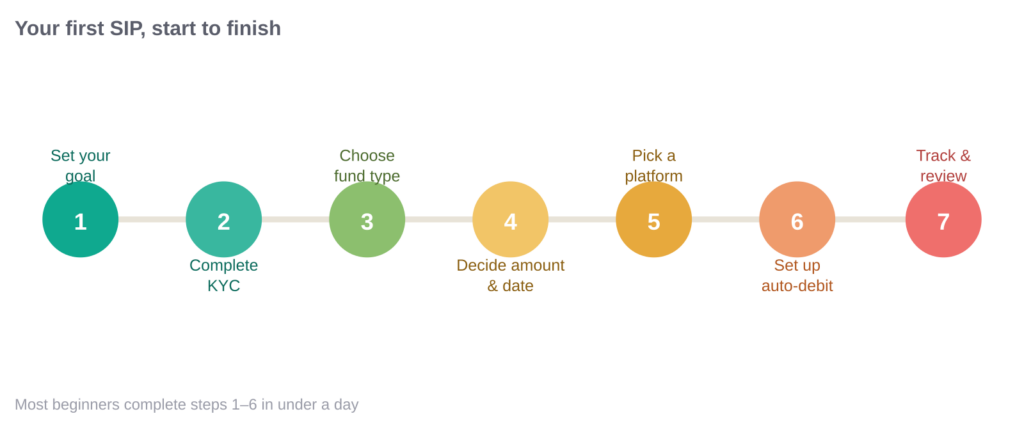
Step 1: Set Your Investment Goal
Before picking any fund, get clear on what this money is for — a house down payment in 5 years, your child’s education in 15, or just general long-term wealth building. Your goal decides almost everything else: how much risk makes sense, which fund category fits, and how long you should stay invested.
Step 2: Complete Your KYC (PAN, Aadhaar, Bank Details)
KYC (Know Your Customer) is a one-time process required before you can invest in any mutual fund in India. You’ll need your PAN card, Aadhaar, a cancelled cheque or bank statement, and a passport-size photo. Most platforms now let you complete this entirely online — a selfie, an OTP, and a few uploaded documents, and you’re usually verified within a day or two.
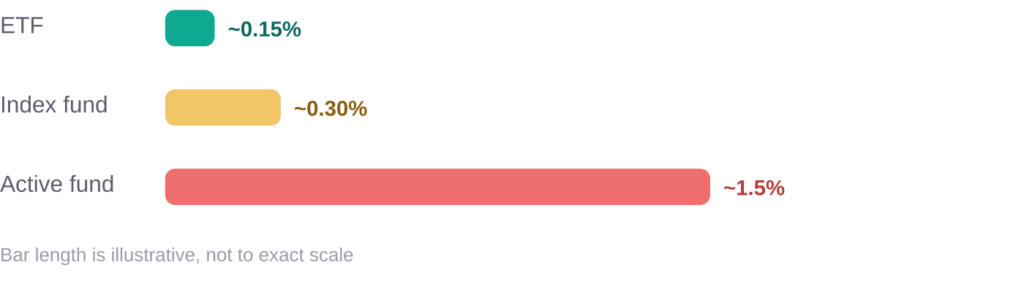
Step 3: Choose the Right Type of Mutual Fund
This is where most beginners feel stuck, so here’s a simple way to think about it based on how much risk you’re comfortable with:
|
Risk Appetite |
Fund Type |
Best Suited For |
|
Low — can’t handle much ups & downs |
Debt / Liquid Fund |
Short-term goals, parking emergency funds |
|
Moderate — okay with some fluctuation |
Hybrid Fund |
Medium-term goals, 3–5 years |
|
High — comfortable riding out volatility |
Equity Fund (Flexi/Large-cap) |
Long-term wealth building, 7+ years |
Step 4: Decide Your SIP Amount and Date
Pick an amount that won’t strain your monthly budget — ₹500 to ₹2,000 is a completely reasonable place to start. As for the date, choose a day right after your salary lands, so the money leaves before you have a chance to spend it elsewhere.
Step 5: Select a Platform or Distributor
You can invest directly through an AMC’s app, a mutual fund investment app, or through a registered distributor or advisor. Going direct can save a small amount on expense ratio, but working with an advisor means you get help with fund selection, goal planning, and portfolio reviews along the way — often worth it, especially for your very first investment.
Step 6: Set Up Auto-Debit (NACH Mandate
Once you’ve chosen your fund and amount, you’ll set up a NACH mandate — basically a one-time authorization that lets the fund house auto-debit your bank account every month. Set it up once, and you never have to manually transfer money again.
Step 7: Track and Review Periodically
A SIP isn’t something you set up and never look at again. Check in every few months — not to obsess over daily NAV movements, but to make sure the fund is still performing reasonably and still matches your goal. Once a year, a proper review is worth doing, ideally with an advisor.
How Much Should a Beginner Start With?
There’s no magic number — the honest answer is: whatever amount you can commit to consistently without feeling it every month. Starting with ₹1,000 and staying consistent for five years beats starting with ₹5,000 and quitting after two months. You can always step up your SIP amount every year as your income grows.
Common Mistakes Beginners Make With Their First SIP
A few things to watch out for: stopping your SIP the moment the market dips (which defeats the whole purpose of rupee cost averaging); picking a fund just because a friend mentioned it, without checking if it fits your goal; starting with an amount that’s a stretch and abandoning it within months; and forgetting to increase your SIP amount as your salary grows over the years
How Unicorn Finances Helps You Start Right
Getting your very first SIP set up correctly — the right fund, the right amount, the right paperwork — makes it far more likely you’ll actually stick with it. At Unicorn Finances, we walk first-time investors through each of these steps personally, so you’re not guessing your way through KYC forms or fund fact sheets alone.
Ready to start your first SIP?
We’ll handle the paperwork, help you pick the right fund, and set everything up correctly the first time — so you can start investing with confidence, not confusion.
Leave A Comment